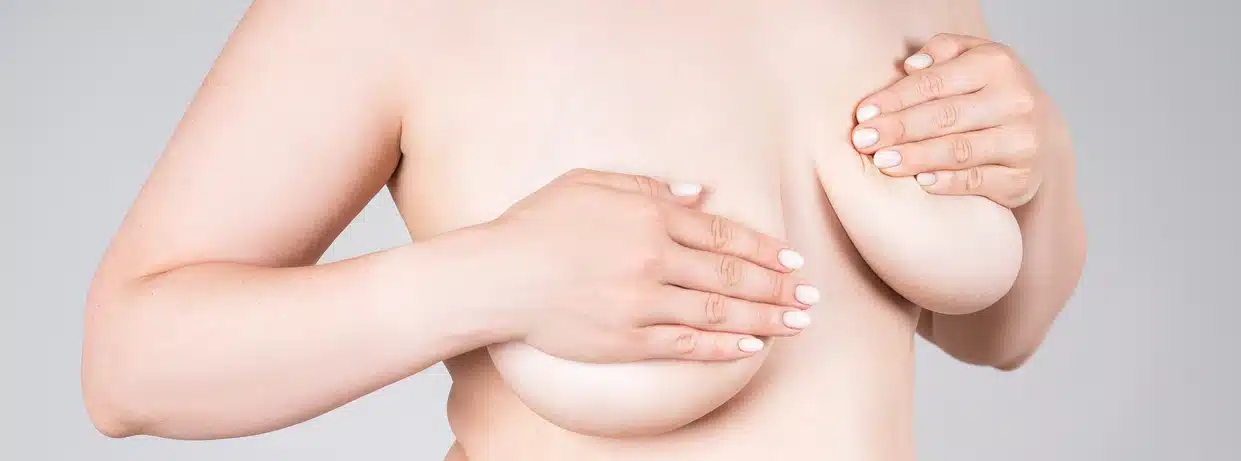
If you have ever stood in front of the mirror and noticed that one breast is a little larger, sits slightly lower, or has a differently shaped nipple than the other — you are completely normal, and you are far from alone.
Breast asymmetry — having two breasts that are not perfectly matched — is one of the most common questions women bring to a plastic surgery consultation. The reassuring truth is that some degree of difference is the rule, not the exception. In this article, the Argaman Plastic Surgeries Mexico team explains what is normal, why it happens, the warning signs that deserve a doctor's attention, and the options available if uneven breasts affect your confidence.
The short answer: yes, it's normal
Yes — it is entirely normal to have different-sized breasts. Studies suggest that the great majority of women have a noticeable difference between their two breasts, and almost everyone has at least a subtle one. The human body is simply not symmetrical: one foot is often larger than the other, eyebrows rarely match exactly, and the two sides of the face differ. The breasts are no exception.
In most cases the difference is small, develops naturally over time, and is nothing to worry about. It does not affect your health, your ability to breastfeed, or your long-term wellbeing. It is purely a matter of appearance — and only matters as much as you feel it does.
Why one breast is often bigger than the other
Breast size and shape are influenced by several natural factors, and a difference between the two sides can come from any of them:
- Normal anatomical variation — the two breasts simply develop slightly differently, just like the rest of the body.
- Hormonal changes — puberty, the menstrual cycle, pregnancy and breastfeeding all cause the breasts to swell and change, sometimes unevenly.
- Differences in tissue — one breast may contain more glandular or fatty tissue than the other.
- Rib cage and posture — the underlying shape of the chest wall and spine can make one breast appear higher or fuller.
- Pregnancy and nursing — many women notice a new or more pronounced difference after breastfeeding, as the breasts change volume.
In a small number of cases, a more defined difference is present from puberty — a developmental condition that is benign but can be addressed surgically if it bothers the patient.
What counts as normal asymmetry
Normal asymmetry is typically mild, stable and long-standing. You may have always noticed that one breast fills a bra cup a little more, or that one nipple sits slightly differently. If this has been the case for years and has not changed suddenly, it is almost certainly just your natural anatomy.
It also helps to remember that asymmetry can involve more than size: breasts can differ in shape, projection, the position of the fold beneath them, or the size and direction of the areola. All of these variations fall comfortably within the normal range.
"Symmetry is a goal in surgery, not a fact of nature. Almost no one is born perfectly even." — a guiding principle of aesthetic breast surgery
Warning signs and when to see a doctor
While long-standing asymmetry is reassuring, certain new or sudden changes are not part of normal variation and should always be evaluated promptly by a physician. Contact a doctor if you notice:
- A sudden or rapid change in the size or shape of one breast.
- A new lump or area of thickening in a breast or under the arm.
- Skin changes such as dimpling, puckering, redness or an "orange-peel" texture.
- Nipple changes — a nipple that newly turns inward, or any discharge (especially if bloody).
- Persistent, localised pain in one specific spot.
These signs are not typical of ordinary asymmetry. They do not necessarily mean something serious, but they should be checked without delay so any underlying cause can be ruled out. Routine breast self-awareness and age-appropriate screening remain the best habits for catching changes early.
Surgical options if it bothers you
When the difference is significant enough to affect how clothes fit, limit confidence, or simply feel like a daily frustration, it can be corrected. Our board-certified surgeons tailor the approach to your anatomy and your goals, often combining techniques to achieve a balanced, natural result:
- Breast lift — when one breast sits lower than the other, a breast lift repositions the tissue and the nipple to match the higher side.
- Augmentation with tailored implants — using implants of different sizes can build up the smaller breast to match its partner.
- Reduction — alternatively, the larger breast can be reduced to match the smaller one.
- Fat transfer — for subtle differences, fat harvested with advanced liposuction using modern atraumatic techniques can be grafted to refine volume and shape.
A consultation is the only way to know which approach is right for you. During it, one of our surgeons measures both breasts, listens to what you want to change, and explains the realistic outcome — because perfect symmetry is rarely achievable, and the honest goal is balance and harmony.
Correcting breast asymmetry in Mexico City
Since 2012, Argaman Plastic Surgeries Mexico has organised plastic surgery trips to Mexico City for international patients who want the same standard of care they would receive at home, without the same price tag.
- Board-certified plastic surgeons with decades of experience in aesthetic breast surgery.
- Procedures performed in accredited private hospitals with FDA-approved implants and modern safety standards.
- All-inclusive packages — surgeon, anesthesiologist, hospital, hotel, transfers and follow-up care — at significant savings versus U.S. and Canadian pricing.
- A bilingual coordinator from your first message until your final virtual follow-up after you return home.
Wondering whether your breast asymmetry can be corrected?
Request a free, no-obligation virtual consultation with one of our board-certified plastic surgeons. You will receive a personalised plan, a transparent quote and honest answers to every question — typically within 24 hours. Book a consultation to get started.
BOOK A CONSULTATION