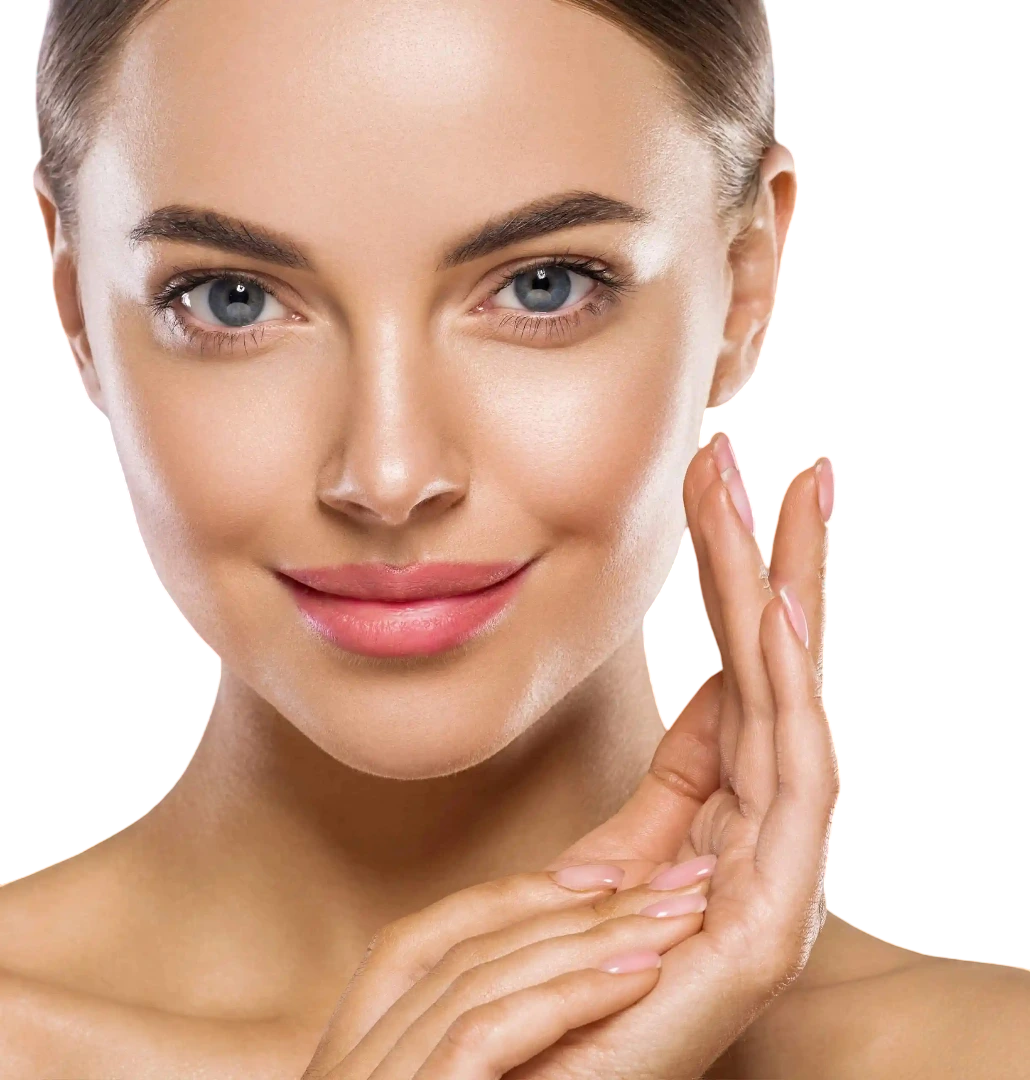
The oval face shape is often described as the most balanced and versatile of all facial forms — but what actually defines it, and how can you tell whether your own face is oval?
Understanding your face shape is more than a styling exercise. It helps you choose flattering haircuts, glasses and makeup, and it gives you a useful frame of reference if you ever consider aesthetic treatment. In this guide, the Argaman Plastic Surgeries Mexico team explains exactly what an oval face is, the proportions that define it, and a simple way to recognize one at home.
What is an oval face shape?
An oval face shape is one in which the face is slightly longer than it is wide, with the curve of the jaw mirroring the curve of the forehead in a smooth, egg-like outline. The cheekbones sit at the widest part of the face, the forehead is marginally broader than the jaw, and there are no hard angles anywhere along the contour.
Artists and clinicians often treat the oval as a reference point because its proportions are considered naturally harmonious. That does not make it superior to any other shape — every face can be striking — but its balance is why so many hairstyles and accessories tend to suit it.
The defining features of an oval face
A face is generally classified as oval when it shows the following characteristics together:
- Length greater than width — the face is noticeably longer (top of forehead to bottom of chin) than it is wide.
- Cheekbones at the widest point — the face is widest across the cheekbones, not the jaw or forehead.
- Forehead slightly wider than the jaw — there is a gentle taper from the upper face down toward the chin.
- Softly rounded jawline — the jaw curves smoothly and is never sharp or square.
- Gently rounded chin — the chin is neither pointed nor flat, completing the smooth oval outline.
When all of these appear at once, the result is the gradual, curved silhouette that defines the oval shape.
How to recognize an oval face at home
You do not need any special tools to identify your face shape — just a mirror, good lighting and, ideally, a soft measuring tape.
The quick mirror test
Pull your hair back, face the mirror straight on and trace the outline of your face. If it looks like a slightly elongated egg, with the widest point at your cheekbones and a soft, tapering jaw, you are likely looking at an oval face.
The measurement method
For a more precise check, measure four distances with a soft tape and compare them:
- Face length — from the center of your hairline to the tip of your chin.
- Cheekbone width — across the widest part of your cheekbones.
- Jawline width — from the angle of one jaw to the other.
- Forehead width — across the widest part of your forehead.
For an oval face, the length is the largest number, the cheekbone width is greater than the forehead and jaw, and the forehead is a touch wider than the jaw. If those relationships hold and your jaw is rounded rather than angular, your face is oval.
"Recognizing your face shape is simply about proportion — length versus width, and where the face is widest." — a practical principle of facial analysis
Oval vs round, square and heart shapes
The easiest way to confirm an oval face is to rule out the shapes it is most often confused with.
| Shape | Length vs width | Widest point | Jawline |
|---|---|---|---|
| Oval | Longer than wide | Cheekbones | Softly rounded |
| Round | Roughly equal | Cheeks | Soft, curved |
| Square | Roughly equal | Forehead & jaw similar | Strong, angular |
| Heart | Longer than wide | Forehead | Narrow, pointed chin |
In short: a round face is about as wide as it is long; a square face has a strong, angular jaw; and a heart face is widest at the forehead and tapers to a pointed chin. The oval sits between them — elongated, widest at the cheekbones and softly curved throughout.
Does face shape change with age?
The bones that frame the face stay largely stable in adulthood, but the soft tissue does not. Over time, the cheek fat that gives the midface its fullness gradually descends, the skin loses elasticity and small jowls can form along the jaw. A face that was clearly oval at twenty-five may begin to look heavier or squarer along the lower face decades later.
Volume loss can also make the lower face appear longer or more hollow. This is why facial proportions can seem to shift with age even when the underlying structure has not — and why many people who once had an oval outline look to restore that balance later in life.
Achieving balanced facial proportions
Because the oval is associated with balance, it is frequently used as a goal when planning aesthetic treatment. Depending on individual anatomy, several options can soften angles or restore lost harmony:
- Buccal fat refinement to gently slim a fuller midface.
- Chin augmentation to add definition and length when the lower face is short.
- Face lift surgery to reposition descended tissue and restore a smoother, more oval contour.
- Injectable treatments to replace lost volume and refine proportions without surgery.
No single procedure suits everyone, and the right plan always depends on your unique features and goals. A face shape is a starting point for conversation, never a prescription — which is why every recommendation should follow a proper assessment with a board-certified plastic surgeon. You can learn more about our team and approach on our main site.
Frequently asked questions
What is an oval face shape?
An oval face is a little longer than it is wide, with the cheekbones as the widest point, a forehead slightly wider than the jaw and a gently rounded jawline with no sharp angles. These balanced proportions are why the oval is often called a naturally harmonious shape.
How can I tell if I have an oval face shape?
Pull your hair back and check four things in the mirror: your face is longer than it is wide, your cheekbones are the widest part, your forehead is slightly wider than your jaw, and your jaw curves softly. If all four are true, your face is most likely oval — and a few tape measurements can confirm it.
What is the difference between an oval and a round face?
A round face is roughly as wide as it is long, with full cheeks and a soft jaw. An oval face is clearly longer than it is wide and tapers slightly toward the chin. The key distinction is the length-to-width ratio.
Does face shape change with age?
The bone structure stays largely the same, but soft tissue changes. Cheek fat descends, jowls can form and skin loosens, which can make an oval face look squarer or heavier along the jaw over time.
Can a procedure help create more oval, balanced proportions?
Yes — buccal fat refinement, chin or cheek augmentation, a face lift or carefully placed injectables can soften angles or restore lost volume. The right approach depends entirely on your anatomy and goals, so a consultation is essential first.
Is the oval the best face shape?
There is no medically superior face shape. The oval is used as a reference because its proportions are balanced, but every shape can look beautiful. Knowing yours is simply a helpful tool for styling and treatment planning.
Want a personalized facial assessment?
Since 2012, Argaman Plastic Surgeries Mexico has helped international patients understand their facial proportions and explore the right options in Mexico City — with board-certified surgeons and accredited private hospitals. Book a free, no-obligation virtual consultation and receive a personalized plan, typically within 24 hours.
BOOK A CONSULTATION