17Mar
Let us advise you!
Contact us now. We advise you without obligation!
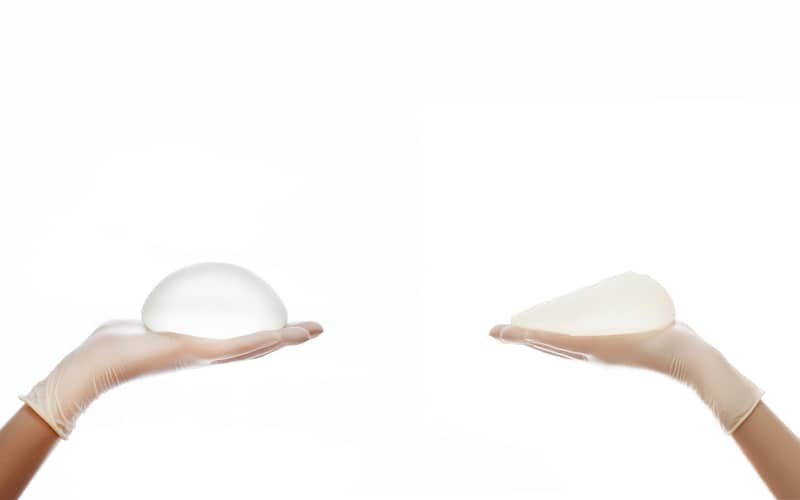
Enhance your silhouette with the support of board-certified plastic surgeons in Mexico City. Premium silicone implants — round or teardrop — placed with the natural-looking finish that has defined Argaman Plastic Surgeries Mexico since 2012.
The package includes:
Surgery-only prices — package available on request.
All prices in US Dollars · personalised quotes are issued after your free consultation.
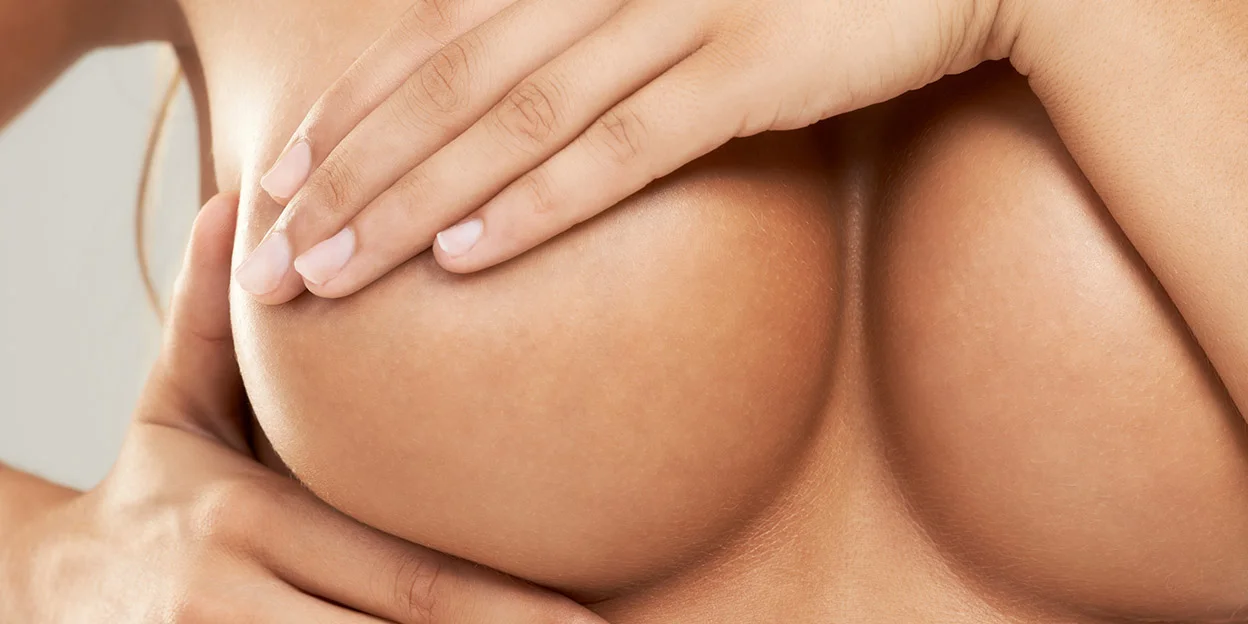
Breast augmentation, also known as augmentation mammoplasty, is a surgical procedure that uses implants to enhance breast volume, shape, projection and symmetry. It is one of the most requested procedures worldwide and one of the signature surgeries performed at Argaman Plastic Surgeries Mexico since 2012.
The surgery is performed under general anesthesia in an accredited private hospital and typically lasts between 1.5 and 2.5 hours. The surgeon makes a discreet incision (in the breast fold, around the areola, or in the armpit), creates a pocket either above or below the pectoral muscle, and inserts the chosen implant.
Ideal candidates are women in good general health, at a stable weight, who wish to enhance their breast volume, restore lost volume after pregnancy or weight loss, or correct asymmetry. Candidates should have realistic expectations, fully developed breast tissue (typically 18+), and no active breast disease. A complete pre-operative consultation determines the most appropriate implant size, type and placement based on your morphology and goals.
Patients typically see immediate volume enhancement, with the final result settling between 3 and 6 months as the implants drop into their natural position. Modern cohesive silicone implants feel soft and natural to the touch. Scars fade significantly over the first year. The result lasts 15 to 20+ years, with the implants only requiring replacement if a complication occurs or if you wish to change size.
This is often the first question our patients ask — proof that they have already begun researching surgical techniques. There are three anatomical positions in which implants can be placed:
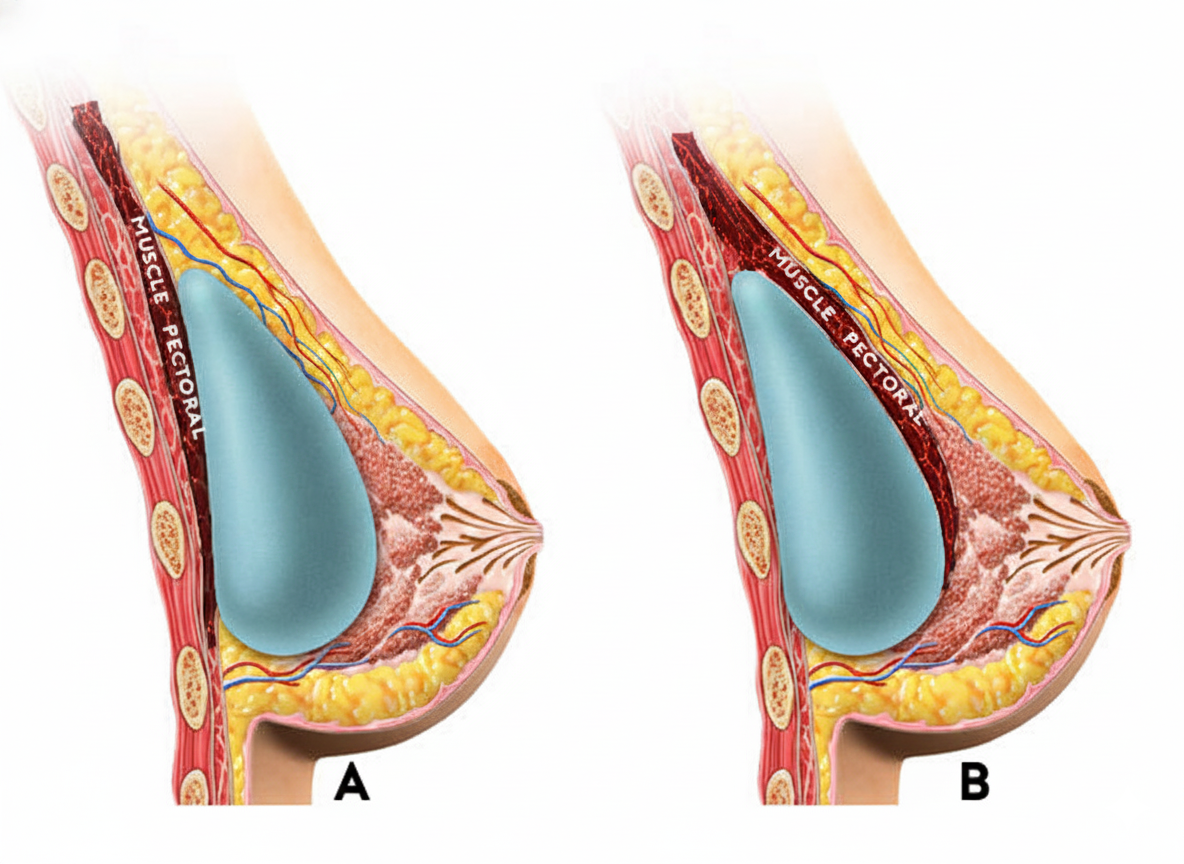
The implant sits under the skin and the mammary gland, with no contact with the muscle structure. The procedure is faster and less painful for the patient. The main drawback is that, in slim patients, the upper edge of the implant may become visible and give the breast a rounded "ball" shape.
The implant is fully enclosed under the muscles of the thorax (pectoralis major, serratus anterior, rectus). The disadvantage of this position is that some patients develop a visible double fold in the lower pole of the breast, marking the boundary between the gland and the lower edge of the prosthesis.
The implant sits behind the pectoral muscle in its upper portion and behind the gland in its lower and outer portion. The result is very natural: the upper edge is hidden by the muscle, and the gland descends to fit the prosthesis perfectly. This technique is particularly suited to correcting breasts with mild skin sagging — common after pregnancy.
The choice of incision is guided by three key criteria — each weighing the comfort of the patient, the precision of the surgeon, and the safety of the implant itself.
For the patient: the scar must remain hidden and of high aesthetic quality once healed.
The approach must allow optimal visibility to create the implant "pocket" with precision.
The opening must be wide enough to slide the implant through without trauma — reducing the long-term risk of rupture.
Many surgical approaches have been described over the decades, but few combine all three advantages. Below are the techniques most frequently discussed during consultation:
Our preferred approach. The scar is concealed in the inframammary fold, fully covered by the breast when standing. It allows a precise dissection without touching the mammary gland, and the implant is slid in safely — never traumatised on insertion. Suitable for all implant types and sizes.
Thanks to its central position, this approach offers excellent visibility for the surgeon. However, it is not recommended when the areola is small. There is also a rare risk of scar retraction, which can create a small notch on the areolar border.
Although the resulting scar is highly inconspicuous, this technique is not part of our practice: visibility during pocket dissection is limited, which can compromise precision and long-term implant positioning.
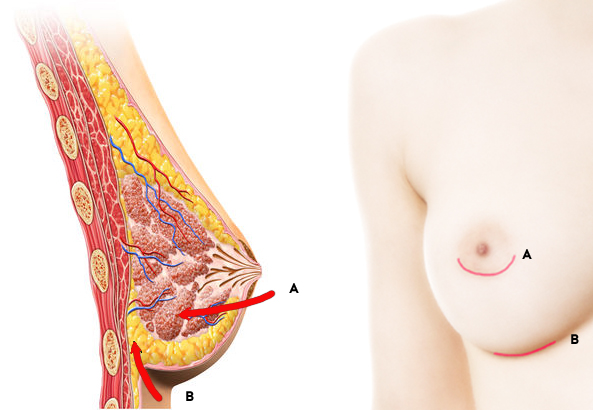
The final choice is decided together during your consultation, based on your morphology, implant choice and personal preference regarding scar location.
Silicone implants — filled with cohesive silicone gel that closely mimics natural breast tissue. Softer, more natural feel, especially for slim patients. Today, more than 95% of breast implants worldwide are silicone, and this is the standard choice at Argaman Plastic Surgeries Mexico.
Round implants — same fullness from every angle. Provide more upper-pole volume and a lifted look. More forgiving surgically; rotation has no visible effect.
Teardrop (anatomical) — shaped like a natural breast, with more volume at the bottom. Provide a very natural appearance, especially for slim patients with little breast tissue. Require precise placement to avoid rotation.
Smooth-surface implants — move freely within the surgical pocket, providing a softer, more dynamic feel. Most commonly used today.
Textured implants — designed to anchor in place and reduce the risk of rotation (especially important for teardrop implants). Less commonly used for round implants today.
The right implant size depends on your chest width, existing breast tissue, skin elasticity and lifestyle. Argaman Plastic Surgeries Mexico uses 3D imaging during consultation to simulate different sizes on your body — so you see the result before deciding. Our surgeons recommend a size that complements your morphology rather than dominates it.
Every implant placed by our surgeons meets the most demanding international regulatory standards. We use exclusively implants that carry the European CE mark and FDA approval (United States Food and Drug Administration) — the two strictest certifications worldwide.
Concretely, this means each implant has passed years of pre-clinical testing, long-term human studies and post-market surveillance. The brands we work with (Mentor, Motiva, Sebbin and equivalent) are the same ones used in top clinics in New York, Paris, London and Zurich.
You receive the serial number, lot number and manufacturer’s warranty card of your implants before leaving the hospital — fully traceable for life, with most brands offering a lifetime warranty against rupture and a 10-year cover against capsular contracture.
Free online or in-person consultation with one of our board-certified surgeons. We review your medical history, evaluate your morphology, discuss your goals and use 3D imaging to simulate different implant sizes and types. You receive a personalised treatment plan and transparent, all-inclusive pricing — with no obligation.
Pre-operative blood work and medical clearance are scheduled. You must stop smoking 4 weeks prior and avoid aspirin or anti-inflammatory medications for 10 days. Maintain a balanced diet and arrive in Mexico City 1 to 2 days before surgery. The Argaman Plastic Surgeries Mexico concierge handles airport transfer and check-in to the partner hotel.
You arrive at the accredited private hospital fasting. The anesthesiologist reviews your file, and the surgeon marks the incision points. The procedure lasts 1.5 to 2.5 hours under general anesthesia. You spend one night in the hospital under medical supervision before returning to the partner hotel.
A licensed M.D. visits you daily at the hotel for the first 5–7 days to monitor recovery, change bandages and answer any questions. You return to the clinic for a final post-op check before flying home. Remote follow-up continues for 3 months once you return — by phone, email and video call.
Mild to moderate discomfort, well controlled with prescribed pain medication. Surgical compression bra worn day and night. Daily M.D. home visits. Sleep on your back, slightly elevated. Most patients are walking and resuming light activity by day 3.
Return to desk work after 7 to 10 days. Light walking and stretching. No lifting more than 5 kg. Compression bra continued. Most swelling resolves by week 3.
Cardio (light running, cycling) is allowed. Compression bra usually transitioned to a sports bra. Implants begin to settle into their natural position. Scars are pink and improving.
Final result visible at 3 to 6 months. Annual check-up recommended. MRI or ultrasound every 5–7 years to monitor implant integrity (silicone). Implants do not need automatic replacement — they last 15 to 20+ years if no complication occurs.
As with any surgical procedure, breast augmentation carries small risks: infection, bleeding, hematoma, asymmetry, changes in nipple sensation. These are rare and minimised by experienced surgeons operating in accredited facilities.
The body naturally forms a thin capsule of scar tissue around any implant. In some cases, this capsule thickens and contracts, distorting the implant. Modern smooth implants placed via the dual-plane technique have very low rates of capsular contracture (under 5%). Mild cases are graded I-II (no treatment needed); severe cases (Baker III-IV) may require revision surgery.
Modern cohesive silicone implants are highly stable. Rupture rates are below 1% per year. If rupture occurs, the cohesive gel stays in place rather than spreading. Routine MRI/ultrasound every 5–7 years is recommended.
All surgeons at Argaman Plastic Surgeries Mexico are board-certified by CMCPER and/or ASPS, with 20-30 years of experience. Procedures are performed exclusively in accredited private hospitals and high-standard surgical centres in Mexico City. We use only premium FDA-approved or CE-marked implants from leading manufacturers. Our complication rate is significantly below the international average.
Capsule fibrosis — also called capsular contracture — is a hardening of the connective tissue that naturally forms around any breast implant. After surgery, the body responds to the implant as a foreign body and encloses it in a thin capsule of scar tissue. This is a completely normal healing process and, in most cases, the capsule remains soft and unnoticeable.
In a small percentage of cases, however, this capsule thickens and contracts around the implant, altering the shape, firmness or position of the breast — and sometimes causing pain or visible deformation.
Modern surgical techniques and premium FDA-approved implants have significantly reduced the rate of capsule fibrosis. At Argaman Plastic Surgeries Mexico, current incidence is below 5% over 10 years, well below the international average.
Capsule fibrosis is classified worldwide using the Baker scale, from Grade I (no symptoms) to Grade IV (visible deformity with pain).
Grade I — Normal state. The breast is soft and looks natural. Changes are neither visible nor palpable. No treatment required.
Grade II — Mild form. Externally no change is visible, but the breast feels minimally hardened. Monitoring only.
Grade III — The breast is clearly hardened and visibly deformed. The patient does not yet feel pain. Surgical revision is considered.
Grade IV — Pronounced fibrosis. Clearly visible and palpable changes accompanied by pain. Surgical revision is recommended (capsulectomy + implant exchange).
The exact cause of capsule fibrosis is not fully understood, but several risk factors significantly increase the likelihood of developing it :
Most patients experience no symptoms at all. When capsule fibrosis develops, it usually does so gradually — over months or years. Contact your surgeon if you notice :
Early detection allows for less invasive treatment. Argaman Plastic Surgeries Mexico patients receive lifetime remote follow-up and are encouraged to schedule an annual check-in.
At Argaman Plastic Surgeries Mexico, every breast augmentation follows a strict 14-point protocol designed to minimise the risk of capsule fibrosis :
Treatment depends on the Baker grade :
Early stages (I–II) — no surgical treatment needed. Conservative measures (gentle breast massage, ultrasound therapy) and monitoring are sufficient.
Stage III — an endoscopic capsulotomy may be performed : small incisions are made in the capsule to release the tension and give the implant more space. Less invasive than full revision.
Stage IV (or recurrent contracture) — a full capsulectomy is recommended : the thickened capsule is surgically removed, the implant is replaced and the placement plane is changed when appropriate (e.g., from sub-glandular to dual-plane). Argaman Plastic Surgeries Mexico includes revision under its Surgical Guarantee when contracture occurs within the warranty period.
Recurrence rates after revision are around 10% — significantly reduced when modern technique is used and risk factors (e.g., smoking) are eliminated.
Argaman Plastic Surgeries Mexico' breast augmentation all-inclusive package starts at $3,800 USD. This is a transparent, no-hidden-fees price that covers everything from your arrival in Mexico City to your departure — including premium FDA-approved or CE-marked implants up to 400 cc.
Patients who wish a larger volume than 400 cc may select a higher-volume implant for a small surcharge, transparently quoted during your consultation.
Surgery, surgeons fees, anesthesiologist, hospital stay, premium implants, 7-night hotel stay, all transfers (airport / hotel / hospital), bilingual assistant, all medications, surgical compression bra, daily M.D. home visits and 3 months remote follow-up.
Mexico City offers 50-70% savings compared to the US or Canada — without compromising quality. Lower facility and labour costs, combined with our high-volume expertise, allow us to maintain US/CA standards of safety at a fraction of the price. Most international patients save $8,000–$15,000 USD on breast augmentation.
Breast augmentation is performed under general anesthesia and typically takes 1.5 to 2.5 hours. The surgeon makes a discreet incision (inframammary, periareolar or transaxillary), creates a pocket either above or below the pectoral muscle, places the chosen implant, and closes with absorbable sutures. Most patients are discharged after one night.
Modern cohesive silicone implants are softer and feel more natural, especially for slim patients with little breast tissue. More than 95% of breast implants worldwide are silicone today, and this is the standard at Argaman Plastic Surgeries Mexico.
Round implants offer fullness in the upper pole and a more lifted look. Teardrop (anatomical) implants mimic the natural breast shape with more volume at the bottom. Round are more forgiving surgically; teardrop require precise placement to avoid rotation.
Argaman Plastic Surgeries Mexico' all-inclusive breast augmentation package starts at $3,800 USD and includes the surgery, all medical fees, certified hospital stay, 7-night hotel, transfers, bilingual assistance and full pre/post-op care. Surgery alone is $3,500 USD.
In most cases, yes. Modern surgical techniques (especially inframammary and transaxillary incisions) preserve the milk ducts and nipple sensation. Discuss with your surgeon during consultation if breastfeeding is a long-term goal.
Most patients return to desk work after 7 to 10 days. Light cardio is allowed at 3 weeks; chest workouts and heavy lifting at 6 weeks. A surgical compression bra is worn day and night for the first 4-6 weeks.
Modern implants are designed to last 15 to 20+ years. They do not need automatic replacement at 10 years (this is an outdated myth). Replacement is only necessary if a complication occurs (capsular contracture, rupture) or if you wish to change size.
Argaman Plastic Surgeries Mexico surgeons place incisions in the most discreet locations — under the breast fold (inframammary), around the areola (periareolar) or in the armpit (transaxillary). Scars fade significantly over 12 months and are typically barely visible.
World-class plastic surgery, coordinated from the heart of Mexico City — since 2012.
Calle Querétaro 58, Roma Nte
Mexico City, 06700