15May
Let us advise you!
Contact us now. We advise you without obligation!
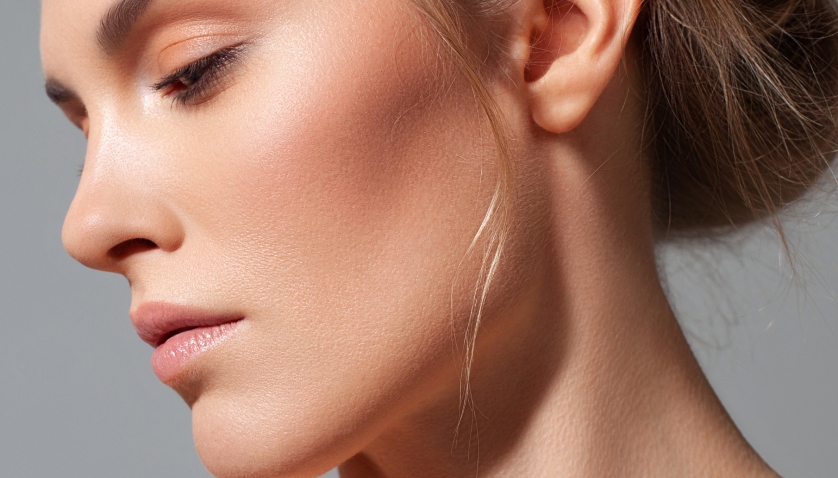
A second chance at the nose you wanted — rebuilt with structural cartilage grafts and a steady, experienced hand. Open approach, septal, conchal or costal grafting, dedicated revision protocol.
The package includes:
All prices in US Dollars. Final cost depends on cartilage source (septum, ear, rib) and case complexity, confirmed after review of your operative report.
All prices in US Dollars · personalised quotes are issued after review of your previous operative report.

A revision rhinoplasty is a corrective surgery performed on a nose that has already had at least one operation whose aesthetic or functional result is unsatisfactory. It is one of the most technically demanding operations in plastic surgery — the anatomy is altered, structural cartilage is often weakened, and the skin envelope no longer redrapes the way it does on a virgin nose.
A revision is not another rhinoplasty. It is a different operation that asks for a different surgeon.
Minimum 12 months after the previous surgery. The nose needs that time for swelling to fully resolve and for tissues to soften — operating too early on dense post-operative scar tissue gives an unpredictable result. We usually prefer 12 to 18 months. For severe functional problems (significant breathing obstruction) the wait can be shorter.
A revision can almost always improve a nose — but it cannot always make it perfect. The natural anatomy has been altered, available cartilage may be limited, and skin behaviour is harder to predict. Our consultation explains exactly what is realistically achievable for your case and what is not.
Revision rhinoplasty is almost always performed through the open approach, even when the first surgery was closed.
The altered anatomy and scar tissue need to be visualised directly — blind dissection through scarred planes is unsafe.
Structural grafts must be sutured with millimetric precision. This is only possible with the framework exposed.
Modern revision rhinoplasty is a reconstructive operation, not a touch-up. We rebuild the support of the nose with grafted cartilage, then redrape the skin envelope around the new structure.
What was reduced too aggressively in the first operation is rebuilt. What was left weakened is reinforced. The goal is a stable, natural nose — not a smaller one.
Our first choice when still available. Septal cartilage is firm, easily shaped and harvested through the same incision as the rhinoplasty — no additional scar. It is used for spreader grafts (to rebuild the internal valve), columellar struts (to support the tip) and small tip onlays.
In many revisions the septum has already been depleted by the first surgeon, which is why we always plan secondary sources before the operation.
The concha of the ear provides a curved, slightly more flexible cartilage that is ideal for tip refinement and for alar batten grafts. The incision is hidden behind the ear and leaves no visible scar. Healing of the ear is quick and uneventful.
Reserved for major reconstructions — severely over-reduced noses, complete dorsal collapse, or when both septal and conchal supplies are insufficient. Harvested through a small inframammary or sub-pectoral incision under the same general anesthesia. Rib cartilage provides the strongest, most abundant graft material available.
For smooth dorsal contour augmentation, cartilage is finely diced and wrapped in fascia or PDS (a slowly absorbable material). This gives a perfectly even bridge contour and avoids the visible edges that grafts can sometimes show through thin skin.
Every revision starts with a careful review of your previous operative report, recent photographs and any imaging available. This tells us what cartilage was used, what was resected and what graft sources are likely still available. A virtual consultation follows, then an in-person assessment 2 days before surgery.
Pre-operative blood work and medical clearance are scheduled. You stop smoking 4 weeks before and avoid aspirin or anti-inflammatory medication for 10 days. Arrive in Mexico City 2 days before surgery for the in-person consultation. Airport transfer and hotel check-in are handled by the Argaman Plastic Surgeries Mexico concierge.
You arrive fasting at the accredited private hospital. The anesthesiologist reviews your file and the surgeon marks the planned reconstruction. The procedure lasts 3 to 5 hours under general anesthesia — longer than a primary because of scar tissue dissection and graft preparation. You spend one night in hospital under monitoring.
A licensed physician visits you daily at the hotel for the first 7 days. The external splint is removed at day 7 to 10. Internal silicone splints are removed shortly after. A final clinic check before flying home, then remote follow-up by video call continues for 18 months as the result refines.
Mild to moderate discomfort, controlled with prescribed medication. The external splint is worn day and night. Bruising around the eyes peaks at day 2–3 and fades by day 10 to 14. Sleep on your back, head elevated. Splint removal at day 7 to 10.
Most visible bruising resolves by day 14. Return to desk work after 14 days. The bridge already looks much like the final result — the tip is still noticeably swollen. No glasses resting on the bridge for 6 weeks. No contact sport.
Light cardio is allowed at 4 weeks; full exercise at 6 to 8 weeks. Swelling visibly improves but more slowly than a primary — scar tissue is denser. By month 6, the result is approximately 70% of final.
The definitive result is visible at 12 to 24 months — meaningfully longer than a primary rhinoplasty. Patience is essential. Once stable, the result is permanent.
Revision rhinoplasty has a slightly higher complication rate than a primary case — altered anatomy, denser scar tissue and reduced blood supply all play a role. Possible risks include bruising, prolonged swelling, asymmetry, graft visibility and small revisions of the revision (around 8–12% worldwide).
Cartilage grafts can warp slightly as they heal, especially costal grafts. We minimise this by choosing balanced graft segments and carving them along the cartilage’s natural axis. Rib graft donor site has its own mild risks: a small scar, temporary chest discomfort and rare pneumothorax (under 0.1%).
Skin that has been thinned by the first dissection can take longer to heal and may show graft edges under it. Thick, sebaceous skin sometimes hides refinement details. We discuss your specific skin behaviour openly at consultation.
Revisions are performed by our surgeons with the highest revision case volume, supported by a board-certified anesthesiologist and an operating-room team that performs nose surgery weekly. All procedures are in accredited private hospitals. Detailed pre-operative review of the previous operative report, conservative graft planning and daily post-operative follow-up keep our revision complication rate below international averages.
Our revision rhinoplasty package starts at $3,900 USD all-inclusive. Surgery alone is $3,650 USD when you organise your own accommodation. Costal (rib) cartilage harvesting adds $500 to $800 when needed for major reconstructions.
Surgery (with cartilage grafting from septum or ear), surgeon’s fees, anesthesiologist, accredited private hospital stay (1 night), 7 to 10 night hotel stay, all transfers, bilingual assistant, all medication, external splint, daily physician home visits and 18 months of remote follow-up.
An equivalent revision rhinoplasty in the United States typically costs $12,000 to $25,000 USD, with no hotel or concierge service included. Most international revision patients save $8,000 to $20,000 USD by choosing Argaman Plastic Surgeries Mexico.
A secondary rhinoplasty performed after a first nose operation whose aesthetic or functional result was unsatisfactory. It usually requires advanced techniques: cartilage grafting, scar tissue management and structural reconstruction.
Minimum 12 months. The nose needs that time for swelling to resolve and tissues to soften. We usually prefer 12 to 18 months. For severe functional problems the wait can be shorter.
Significantly. Altered anatomy, scarred planes, depleted cartilage and different skin behaviour all add complexity. It needs a surgeon with specific advanced training and high revision case volume.
Most revision patients do. We use septal cartilage first when still available, then conchal (ear) cartilage through a hidden incision, and costal (rib) cartilage for major reconstructions.
The all-inclusive package starts at $3,900 USD. Costal (rib) cartilage harvesting adds $500–$800 when needed. The U.S. equivalent costs $12,000 to $25,000 USD.
The final result takes 12 to 24 months — meaningfully longer than a primary. Scar tissue is denser and swelling resolves more slowly. Once stable, the result is permanent.
Frequently, yes. Many revisions are sought precisely because the first surgery damaged the internal nasal valve. Structural grafting can rebuild the airway and restore comfortable breathing in the same operation.
That is the most common case. Send us your previous operative report, recent photographs and any imaging you have. Our team reviews everything before your virtual consultation so we can give you an accurate plan and quote.
World-class plastic surgery, coordinated from the heart of Mexico City — since 2012.
Calle Querétaro 58, Roma Nte
Mexico City, 06700